
Guinness Beer Bread with Sausage & Cheddar
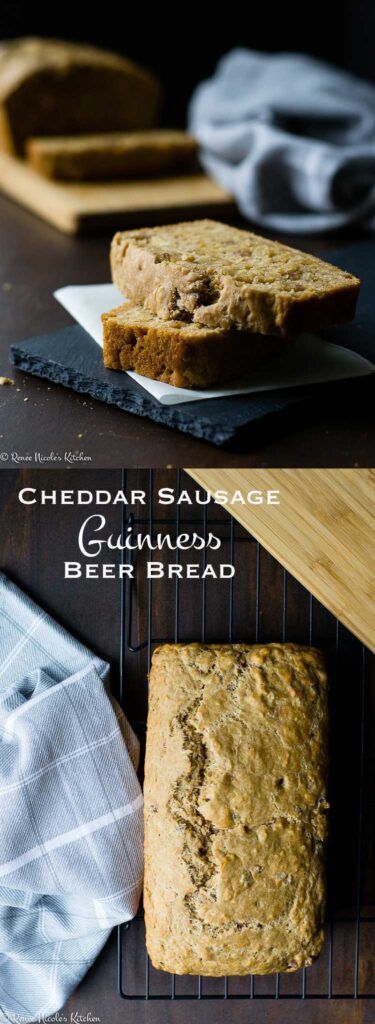
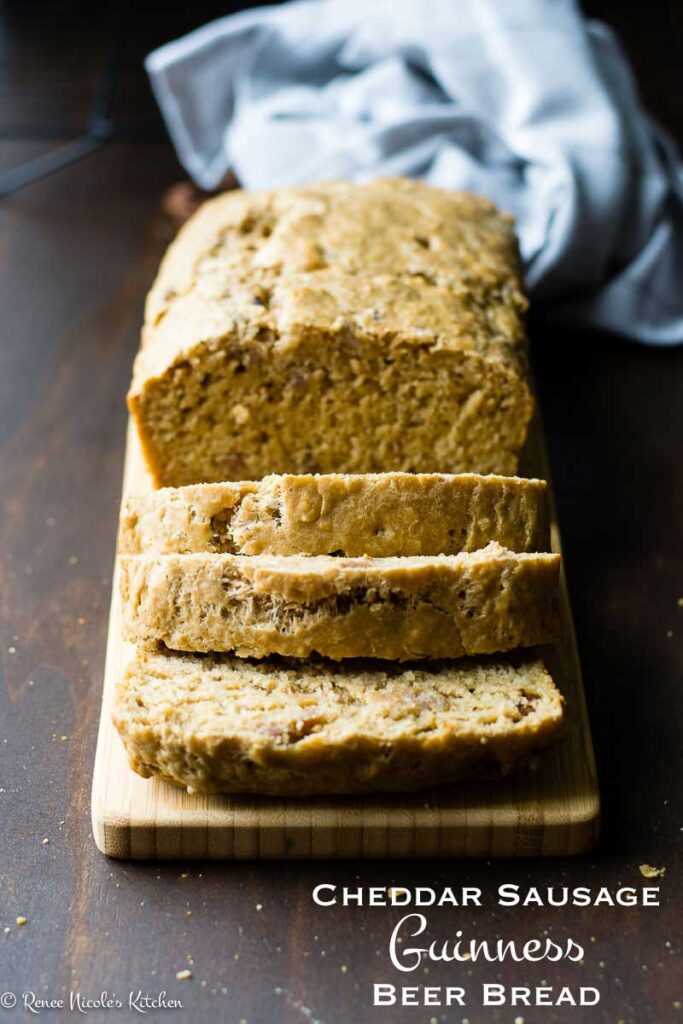
Cheddar sausage Guinness beer bread is a classic quick bread with savory mix-ins and a Guinness twist. It’s a hearty bread, loaded with Irish cheddar, Irish sausage, and Irish beer. The perfect treat for your St. Patrick’s Day celebration. Like most quick breads it needs no time to rest or rise. Mix it up and bake it right away. Serve fresh from the oven with a bowl of your favorite Irish stew, or add a little more cheddar and turn it into a grilled cheese sandwich. Follow my tips and tricks below to get it right the first time and read a little chemistry lesson about what makes this bread rise. (Hint: It’s not the beer.)

Ahh St. Patrick’s Day. A day when Americans drink green beer, eat green foods, and dye their rivers green in celebration of our Irish heritage – whether or not we have the family tree or DNA test to prove it. While green desserts, green smoothies, and green beans are all fun to eat, sometimes I just need something with a bit more Irish character, that’s a little less green. Something like my cheddar sausage Guinness beer bread.
While similar in method to a traditional Irish soda bread, this beer bread is not really traditional at all. This one has chunks of spicy sausage and sharp, rich cheddar cheese.
However, what makes it truly wonderful is the Guinness (I am a big fan of Guinness!). With its smooth, creamy texture and strong malty flavor, it makes (in my opinion) the perfect beer to use for beer bread. Best of all, the only green you’ll find here are the herbs in the sausage!

Yeast vs Baking Soda: Which one makes the magic?
The magic in making bread, is getting that bread to rise. Traditionally we can use either organic leaveners – like yeast, or chemical leaveners – like baking soda. The rise happens when tiny bubbles are released inside the dough and expand, which can happen before or during cooking. Many believe that it is the beer yeast (aka brewers yeast) that causes that magic in beer bread, but it’s not.
Yeast is a live material that works by eating organic matter (carbohydrates) and letting off carbon dioxide and alcohol. There are many types and strains of yeast, some good and some not so good, but let’s focus on two categories: brewers yeast and bread yeast. Brewers yeast is slow acting and lets off both gas and bubbles, which is why you get fizz in your beer. Bread yeast is faster acting and lets off more of the carbon dioxide bubbles, which makes it great for baking.
Chemical leaveners, like baking soda or baking powder, act quickly – much more quickly than fast acting yeast. The yeast’s reaction can be caused by moisture, heat, or acid, but it’s most effective when it is exposed to all three. You’ll often see chemical leaveners used in muffins, cakes, and quick breads.
Remember how I said that this bread is similar to a traditional soda bread? A traditional soda bread gets it’s magic from a combination of baking soda (leavener) and buttermilk (acid). For this recipe we’ve essentially swapped the soda for baking powder (personal preference) and the buttermilk for Guinness. Not to get any help from that brewers yeast, which either died doing it’s job making beer or was filtered prior to canning, but to provide an acid for the baking soda to react. Which means the beer is here for the flavor not for the yeast.

Irish Guinness Bread Ingredients
Speaking of flavor, let’s talk about why I chose Guinness, more specifically Guinness draught in the can. Simple: I love the taste and it’s St. Patrick’s Day! Guinness draught stout beer is a nitro beer with a smooth creamy texture, dark rich color, and full malty flavor. The richness of the beer shines through in the flavor of the bread. I suppose any Irish stout will do, but if you substitute for something else take note of the quantity. Guinness in a can is 14.9 ounces, while most standard bottles are only 12 ounces.
As always, never cook with something you don’t like to drink. If you prefer beer bread made with a ligher beer, I recommend my apple bacon beer bread recipe. For a beer-free bread, try my English muffin bread. All beer contains enough acid to cause the reaction, so use a beer that will make your tastebuds happy.
I used Irish cheddar and Irish sausage for this bread, but I know they aren’t available everywhere. If you can find them use them, but if not substitutions are okay. Except that bag of shredded cheese. It may be tempting, but it’s so much better when you grate it yourself. The stuff they add to shredded cheese to keep it from clumping is the same stuff that keeps it from melting correctly. The block also has a longer shelf life.
Featured Ingredient: Irish Bangers
Irish sausages, aka Irish Bangers, were harder to find than the cheese, which made me wonder what makes a sausage Irish? The answers varied from the amount of garlic, to the type of herbs, to whether or not the pigs were raised in Ireland. I never did find a perfect answer, but if you know let me know in the comments! If you are looking for a do it yourself recipe, Ronda over at Kitchen Dreaming has a good looking recipe for Irish Sausages.
Fun Fact: Why are bangers called bangers?
One thing to note: do not use pre-cooked sausages in casings. Use a raw, ground sausage and remove the casings prior to cooking. While pre-cooked sausages cook faster, you don’t really want sausage casings in your bread.
Tips and Tricks to Make Guinness Bread Recipe
- Cook the sausage completely before starting to mix the bread.
- Use the spoon and sweep method to measure your flour and dry ingredients.
- Whisk the flour mixture to remove lumps before adding the liquids.
- Let the cooked sausage cool a couple minutes, so that it doesn’t melt the cheese and cause clumps.
- I had a little trouble with the bread sticking when I used butter on the pan. Vegetable oil worked much better.

Cheddar Sausage Guinness Beer Bread Recipe
This cheddar sausage guinness beer bread may be a mouthful to say, but it’s a better mouthful to eat! It tastes best warm from the oven, but reheats easily. Microwave a slice 5 – 10 seconds on medium high, 3 – 5 seconds on high, or toast it in the toaster. To reheat the whole loaf, wrap it in foil and heat in a 350 degree oven.
Leftovers will keep best placed in an airtight container or zip top bag. I keep mine at room temperature up to two days or freeze it for longer storage. Follow the same directions above to reheat from frozen, adjusting the time as necessary.
Like this recipe?
If you made this recipe, please leave a star rating along with a comment below — it helps other readers know what they are getting into before they start. (Five stars is the best!)

Cheddar Sausage Guinness Beer Bread
Ingredients
- 3 cups all purpose flour
- 1 TBSP baking powder
- 2 tsp salt
- 1/4 cup sugar
- 2 ounces cheddar (1 cup shredded)
- 1/2 pound sausage
- 1/4 cup butter – melted
- 14.9 ounces Guinness draught (one can)
Instructions
- Preheat oven to 375 degrees. Liberally butter or oil a 9×5 inch loaf pan.
- Preheat a skillet over medium heat, cook the sausage until browned through. Turn out on to paper towels to drain and allow to cool.
- In a large mixing bowl measure out flour, baking powder, salt, and sugar. Whisk to combine and remove any lumps.
- Add shredded cheddar and stir to combine.
- Crumb sausage into medium small chunks. Add to flour mixture and stir to combine.
- Pour in melted butter and Guinness. Mix until just combined, but don’t over mix. Batter will be sticky.
- Pour batter into greased pan and place immediately into the hot oven. Bake until a toothpick inserted into the middle comes out clean. About 50 – 60 minutes.
- Cool 5 – 10 minutes before slicing.
We are a participant in the Amazon Services LLC Associates Program. As an Amazon Associate I earn from qualifying purchases. Check out my Amazon shop to see all of my recommended kitchen tools.
Nutrition
Nutrition information is automatically calculated and is for general information purposes only. For the most accurate information, calculate using your select brands and exact measurements.
Can you add more cheese and sausage to make this feel like more of a meal kinda?
Hi Dawn! The honest answer is that I don’t know. I haven’t tried it with more cheese and sausage in the actual bread recipe, but I have used this bread to make a grilled cheese sandwich that was amazing with tomato basil bisque. I think it may have potential to work with more sausage and cheese, but I don’t know what the limit would be before the bread just won’t turn out as bread. Perhaps up them by 25% to start? If you do try it, please come back and let all of us know how it turned out.
– Renee
I have forgotten about beer bread. I bet this recipe with Guinness is really good. Perfect for an Irish celebration and for many more days!
Thank Ginny! I’d eat it all year round if I could!